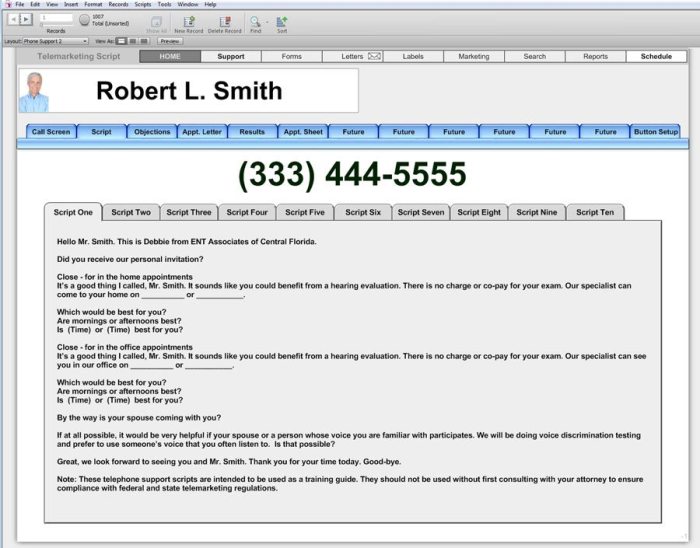
Dive into the world of Telemarketing script writing, where words become powerful tools for driving sales and captivating audiences. Explore the art of crafting compelling scripts that leave a lasting impact on potential customers, guiding them towards a desired action with finesse and strategy.
Unveil the secrets behind creating engaging call openers, structuring seamless call flows, overcoming objections like a pro, and leaving a lasting impression with strong closings. Discover how personalized scripts tailored to specific target audiences can revolutionize your telemarketing campaigns and boost your sales success exponentially.
Introduction to Telemarketing Script Writing
Telemarketing script writing plays a crucial role in the success of any telemarketing campaign. A well-crafted script ensures that the telemarketer conveys the right message effectively, leading to higher conversion rates and customer engagement.
Key Components of a Telemarketing Script
- Introduction: A strong opening that grabs the prospect’s attention and introduces the purpose of the call.
- Product or Service Description: Clear and concise explanation of the benefits and features.
- Handling Objections: Anticipating and addressing common objections or concerns effectively.
- Call to Action: Clearly defined next steps for the prospect to take.
- Closing: Polite conclusion that leaves a positive impression and opens the door for future follow-ups.
Role of Telemarketing Script in Driving Sales Campaigns
Telemarketing scripts serve as a roadmap for telemarketers, guiding them through conversations with prospects. By providing a structured framework, scripts help maintain consistency in messaging, ensure key points are covered, and increase the chances of a successful sale. Additionally, scripts can be continuously optimized based on feedback and performance data to enhance results over time.
Understanding the Target Audience
When creating telemarketing scripts, it is crucial to have a deep understanding of the target audience in order to effectively engage and persuade them. Researching and analyzing the demographics, psychographics, and behaviors of the audience is essential for tailoring scripts that resonate with their needs and preferences.
Researching the Target Audience
To research the target audience, start by gathering demographic information such as age, gender, income level, occupation, and location. Additionally, delve into psychographic factors like interests, values, lifestyle choices, and purchasing habits. Conduct surveys, analyze customer data, and utilize market research tools to gain insights into the audience’s preferences and pain points.
- Utilize customer personas to create fictional representations of your ideal customers, detailing their demographics, interests, and motivations.
- Segment your audience based on common characteristics to tailor scripts for different groups effectively.
- Monitor social media platforms, forums, and review sites to understand customer feedback and sentiments.
- Engage in one-on-one conversations with customers to gather qualitative insights and feedback.
Tailoring Scripts to Different Groups
Once you have a clear understanding of the target audience, it is essential to tailor your telemarketing scripts to resonate with different demographic groups. Consider language, tone, messaging, and offers that are relevant and appealing to each segment of your audience.
- Modify the script language and tone to match the communication style of different age groups.
- Personalize the script with relevant examples or references that resonate with specific demographics.
- Highlight benefits and solutions that address the unique needs and pain points of each group.
- Adapt the script length and pace to match the preferences of different demographic segments.
Significance of Personalization
Personalization plays a crucial role in telemarketing scripts as it helps build rapport, trust, and relevance with the audience. By incorporating personalization elements such as using the customer’s name, referencing previous interactions, and tailoring offers based on their preferences, you can enhance the effectiveness of your scripts.
- Address customers by their names to create a personalized and engaging conversation.
- Reference previous purchases or interactions to show that you value their business and understand their needs.
- Customize product recommendations or offers based on the customer’s previous behavior or preferences.
- Show empathy and understanding towards the customer’s concerns or challenges to build a strong connection.
Crafting Compelling Call Openers
When it comes to telemarketing, the first few seconds of a call are crucial in capturing the attention of the prospect and setting the tone for the conversation. Crafting compelling call openers can make a significant difference in the success of a telemarketing campaign.
Tips for Creating Engaging and Attention-Grabbing Call Openers
- Personalize the opener: Address the prospect by their name and try to establish a connection right from the start.
- Start with a question: Pose a thought-provoking question that piques the interest of the prospect and encourages them to engage in the conversation.
- Highlight benefits: Focus on the benefits or solutions your product or service offers to the prospect, emphasizing what’s in it for them.
- Use a hook: Start with a captivating statement or statistic that immediately grabs the prospect’s attention and makes them want to know more.
The Importance of Establishing Rapport in the Initial Moments of a Call
Building rapport with the prospect in the initial moments of a call is essential for creating a positive interaction and increasing the chances of a successful outcome. By establishing a connection and showing genuine interest in the prospect’s needs, you can build trust and credibility, making them more receptive to your pitch.
Examples of Effective Call Opening Lines for Telemarketing Scripts
“Hi [Prospect’s Name], I noticed that you recently [activity related to product/service]. I’m calling to share how our [product/service] can help you [benefit].”
“Good [morning/afternoon], [Prospect’s Name]. I’m excited to tell you about a special offer we have that can [solve a specific problem or meet a need].”
“Hello, [Prospect’s Name]. Did you know that [interesting fact related to product/service]? I thought you might be interested in learning more about how we can help you [achieve a desired outcome].”
Structuring the Call Flow
When it comes to structuring a telemarketing script, it is important to have a clear and organized flow to guide the conversation with potential customers. A typical structure for a telemarketing script includes an introduction, a value proposition, handling objections, and a call to action. This layout helps keep the conversation focused and ensures that key points are covered.The balance between following a script and allowing for a natural conversation flow is crucial in telemarketing.
While it is important to have a script to guide the conversation and ensure that all necessary information is communicated, it is equally important to be flexible and adaptable during the call. This allows for more personalized interactions and helps build rapport with the prospect.Transitioning between different parts of the script should be seamless and natural. Best practices for transitioning include using transition phrases such as “moving on to the next point” or “now, let’s talk about…”.
It is also important to actively listen to the prospect and respond accordingly to their cues and questions. By staying engaged and responsive, transitions between script components can feel more organic.
Structural Components of a Telemarketing Script
- Introduction: Greet the prospect and introduce yourself and your company.
- Value Proposition: Clearly communicate the benefits of your product or service.
- Handling Objections: Address any concerns or questions the prospect may have.
- Call to Action: Encourage the prospect to take the next step, whether it’s scheduling a demo or making a purchase.
Overcoming Objections
In telemarketing, objections from potential customers are common and can often hinder the success of a call. It is essential for telemarketers to be prepared to handle objections gracefully and steer the conversation back on track to increase the chances of a successful outcome.
Identifying Common Objections
- Price: Many customers may object to the price of the product or service being offered. It is important to emphasize the value and benefits to justify the price.
- Not Interested: Some customers may simply state that they are not interested. In such cases, it is crucial to highlight the unique selling points and address any concerns they may have.
- Timing: Objections related to timing, such as not being ready to make a decision, can be overcome by offering a follow-up call or providing more information to help them make an informed choice.
Handling Objections Gracefully
- Active Listening: Listen attentively to the customer’s concerns and acknowledge their objections before responding. This shows respect and understanding.
- Empathy: Show empathy towards the customer’s viewpoint and demonstrate a willingness to address their concerns effectively.
- Provide Solutions: Offer solutions or alternatives to address the objections raised by the customer, showing flexibility and a customer-centric approach.
Importance of Training Telemarketers
- Role-Playing: Conduct role-playing exercises to simulate objection scenarios and train telemarketers on how to respond effectively in real-time.
- Ongoing Training: Continuous training and feedback sessions can help telemarketers improve their objection-handling skills and enhance their overall performance.
- Encouragement: Encourage telemarketers to view objections as opportunities to engage with customers and provide value rather than obstacles to overcome.
Call-to-Action and Closing
When it comes to telemarketing, the call-to-action is a crucial element that guides the prospect towards the desired action. It is the final push that encourages the prospect to take the next step, whether it’s making a purchase, scheduling a demo, or signing up for a service. A strong call-to-action should be clear, concise, and compelling, making it easy for the prospect to understand what is expected of them.
Significance of a Strong Call-to-Action
- Clearly state the action you want the prospect to take.
- Use persuasive language to motivate the prospect.
- Provide a sense of urgency to prompt immediate action.
Effective Closings
- “Would you like to proceed with the purchase today?”
- “When would be a good time for our team to follow up with you?”
- “I can offer you a special discount if you sign up within the next 24 hours.”
Creating a Sense of Urgency
- Highlight limited-time offers or promotions.
- Emphasize the benefits of acting now rather than later.
- Use phrases like “Act fast to secure this deal” or “Don’t miss out on this opportunity.”
Relationship between Telemarketing, Direct Marketing, and Affiliate Marketing

Telemarketing, direct marketing, and affiliate marketing are all essential components of a comprehensive marketing strategy. Each approach has its unique characteristics and benefits, but when combined effectively, they can create a powerful and cohesive marketing plan that drives results.
Differentiation Between Telemarketing, Direct Marketing, and Affiliate Marketing
- Telemarketing involves direct communication with potential customers over the phone to promote products or services. It relies on building personal connections and engaging prospects in real-time conversations.
- Direct marketing encompasses any marketing effort that communicates directly with individual consumers, such as email marketing, direct mail, and online advertising. It aims to target specific audiences and generate immediate responses.
- Affiliate marketing is a performance-based marketing strategy where businesses reward affiliates for driving traffic or sales through their marketing efforts. It leverages the reach and influence of affiliates to expand the brand’s reach.
Complementarity of Telemarketing, Direct Marketing, and Affiliate Marketing
Telemarketing can be used to follow up on leads generated through direct marketing campaigns, providing a personalized touch and nurturing relationships with prospects. Affiliate marketing can help expand the reach of telemarketing and direct marketing efforts by tapping into the networks of affiliate partners. By integrating all three approaches, businesses can create a seamless customer journey and maximize their marketing impact.
Examples of Successful Campaigns
One successful campaign that integrated telemarketing, direct marketing, and affiliate marketing is a subscription-based service that used telemarketing to qualify leads, direct mail to send personalized offers, and affiliate partnerships to drive online sign-ups. This multi-channel approach resulted in increased conversion rates and customer retention.
Final Summary
In conclusion, mastering the art of Telemarketing script writing is the key to unlocking a world of sales opportunities and converting leads into loyal customers. By understanding the nuances of script crafting, you can elevate your telemarketing game and achieve remarkable results in the competitive business landscape. So, go forth, armed with your newfound knowledge, and script your way to sales triumph!
Top FAQs
How important is personalization in telemarketing scripts?
Personalization is crucial in telemarketing scripts as it helps create a connection with the audience, making them feel valued and understood. Tailoring scripts to specific demographics can significantly increase engagement and response rates.
What are some best practices for transitioning between different parts of a telemarketing script?
To ensure smooth transitions, use natural segues that flow logically from one point to the next. Avoid abrupt changes in tone or subject matter. Practice active listening to adapt your responses based on the prospect’s reactions.
How can a strong call-to-action impact the effectiveness of a telemarketing script?
A strong call-to-action motivates prospects to take the desired action, whether it’s making a purchase, scheduling a demo, or signing up for a service. It creates a sense of urgency and guides the prospect towards a specific outcome, maximizing the script’s impact.